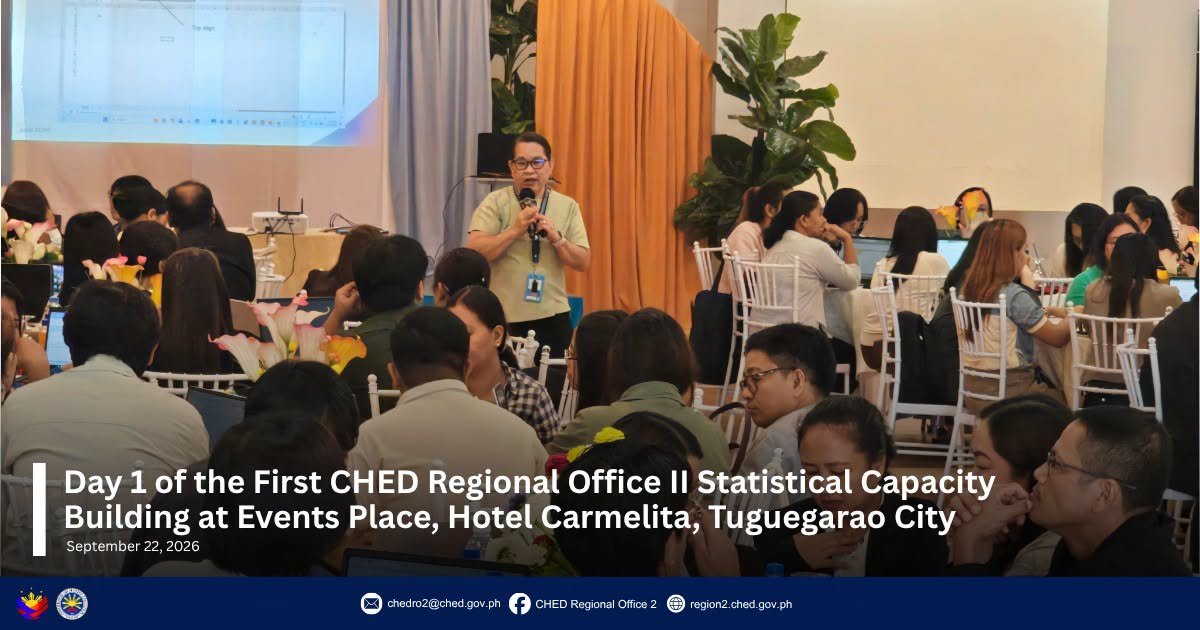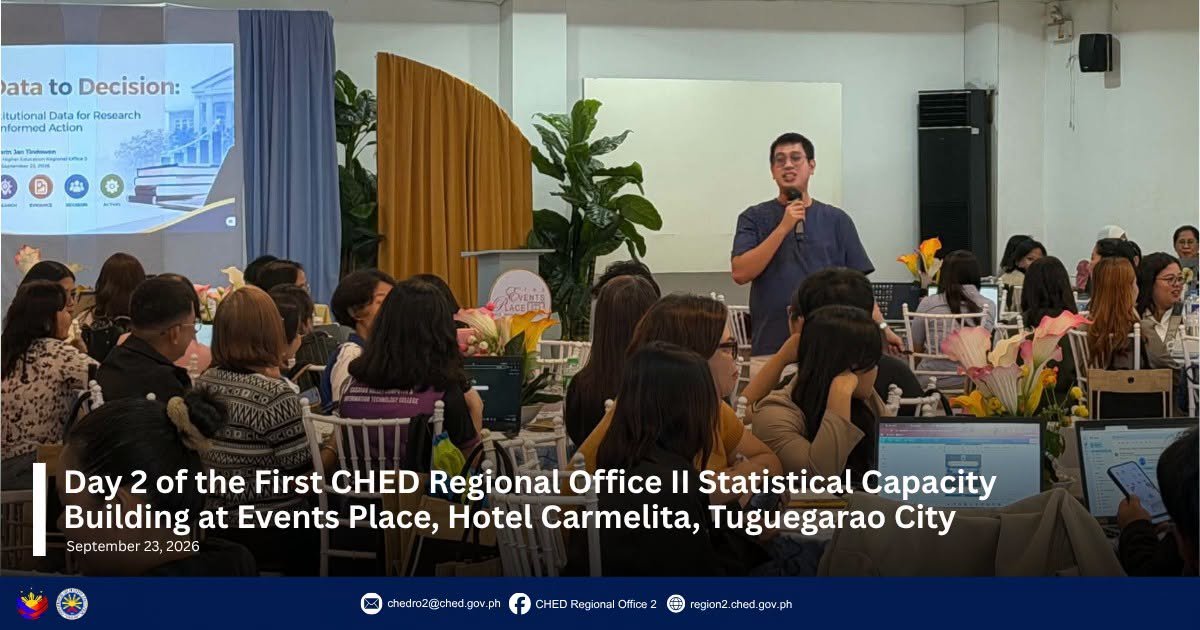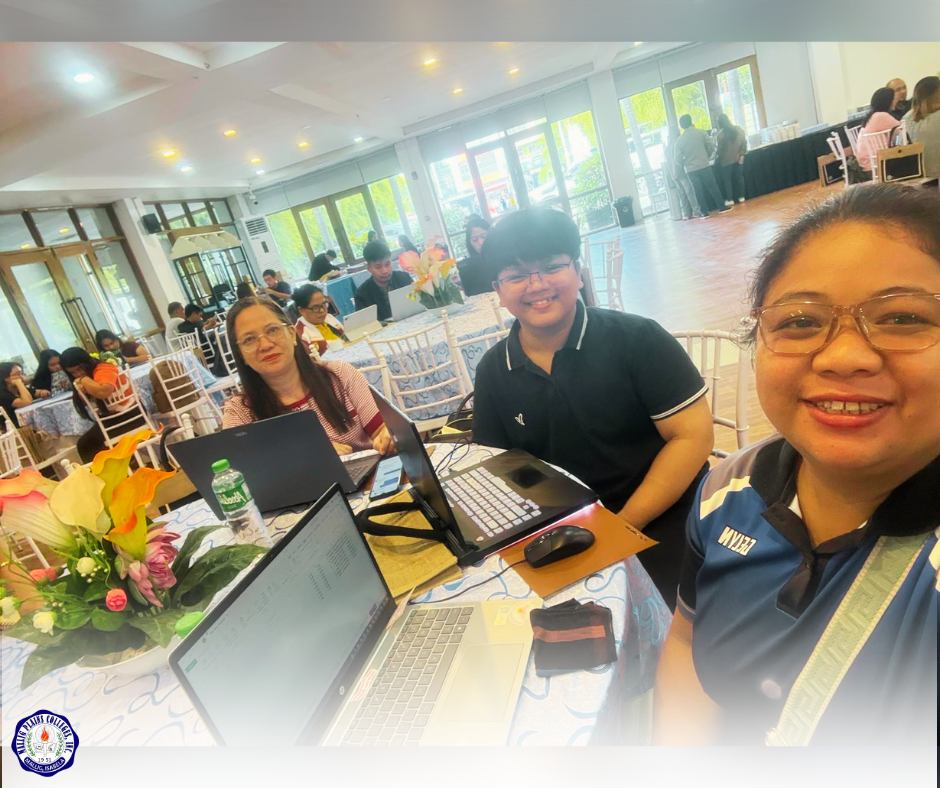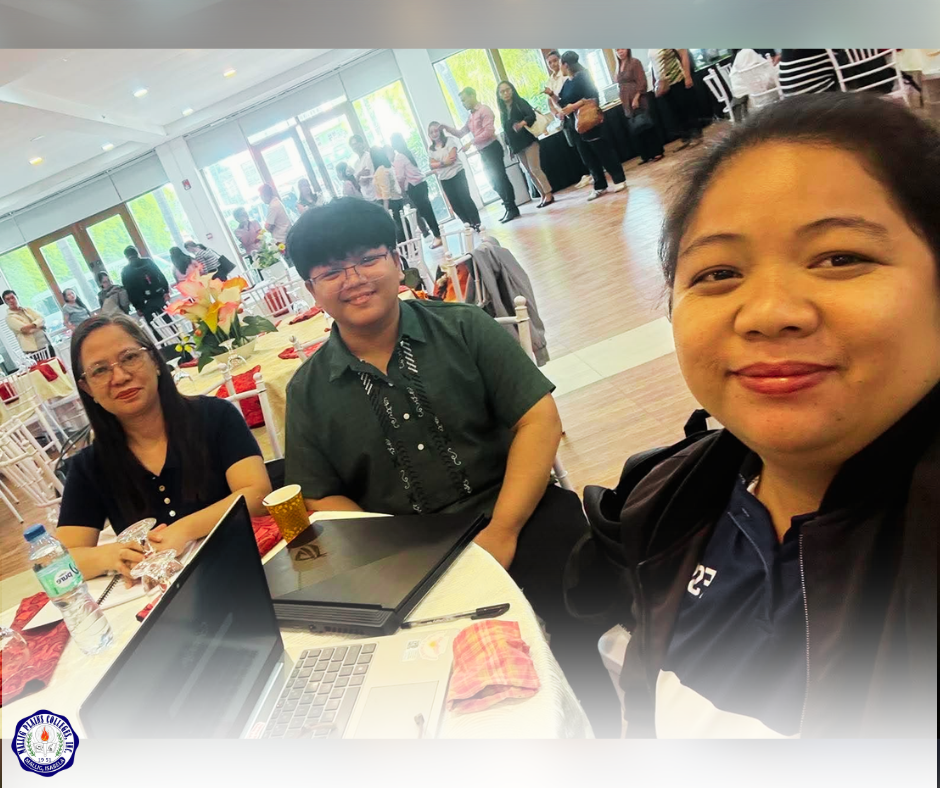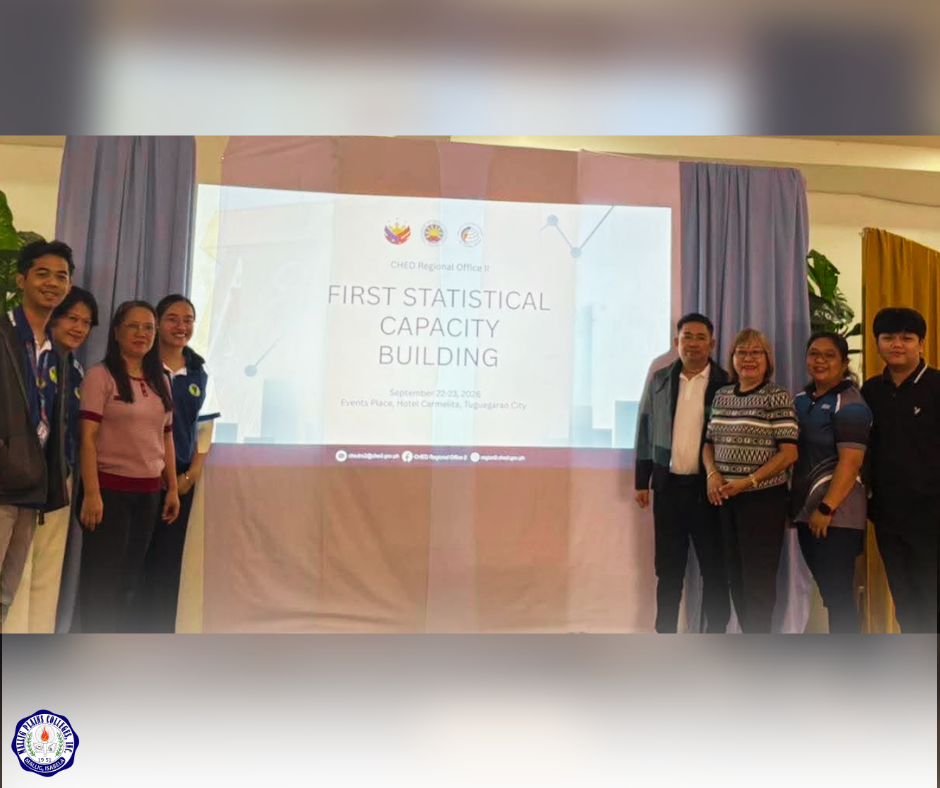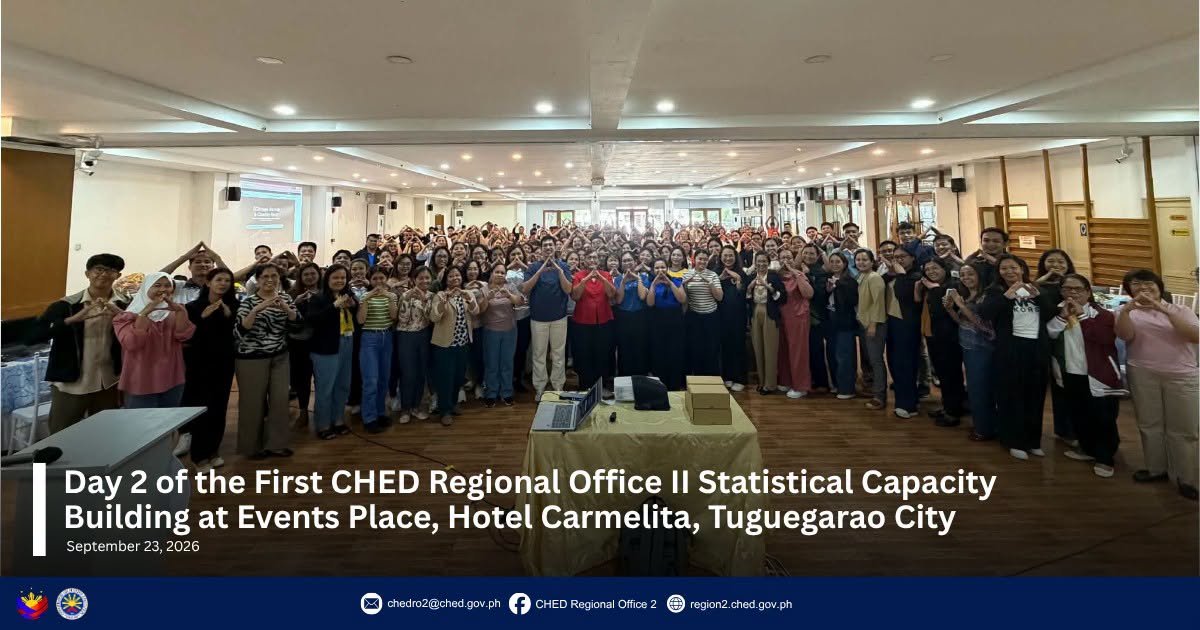
TUGUEGARAO CITY, Cagayan — Key administrative and academic officers from Mallig Plains Colleges, Inc. (MPCI) attended the 1st CHED Regional Office II Statistical Capacity Building on September 22-23, 2026, at Events Place, Hotel Carmelita. Dr. Imelda S. Quinia, Head Registrar; Ms. Gelyn P. Querol, Scholarship Coordinator; and Mr. Jimuel B. Rosales, MIS Coordinator, led the MPCI delegation.
The two-day seminar, organized under Project GUIDE HEI (Governance and Unified Information for Data Excellence in Higher Education Institutions), was held by the Commission on Higher Education Regional Office II (CHED RO2) in collaboration with the Philippine Statistics Authority Regional Statistical Services Office (PSA-RSSO) Regional Office II.
The effort aimed to build advanced competencies in data analytics, digital transformation, and evidence-based decision-making among higher education institutions in the Cagayan Valley region.
Ms. Ma. Juvy S. Agbayani, Senior Statistical Specialist at PSA-RSSO RO2, led the first day, which focused on core data management and spreadsheet procedures. The MPCI delegation learned practical ways for streamlining institutional procedures through hands-on exercises in key analytical formulas, data validation, and structured reporting.
These practical courses addressed day-to-day administrative challenges in major departments. The modules gave Dr. Quinia, Ms. Querol, and Mr. Rosales with improved tools for eliminating reporting errors, verifying academic records, and cleaning institutional datasets required by regional reporting requirements.
The second day began with an inspiring message from Dr. Julieta M. Paras, CESO III, Regional Director of CHED Regional Office II. Dr. Paras emphasized that higher education institutions are primary data providers for national datasets, so statistical integrity is critical for evidence-based policy and institutional growth.
Following the opening address, Dr. Darin Jan Tindowen, Education Supervisor II for Teacher Education, Research, and Extension, led interactive sessions called "From Data to Decision: Harnessing Institutional Data for Research and Evidence-Informed Action" and "From Research to Evidence to Action." Dr. Tindowen urged institutions to transition from passive data gathering to problem-oriented inquiry, advising delegates to identify underlying institutional concerns before developing research questions.
During the interactive talks, MPCI delegates investigated essential approaches for transforming ordinary administrative metrics into research-based policy. Dr. Tindowen underlined that gathering bigger amounts of data does not necessarily improve study quality, citing conventional methods for identifying missing values, duplicate entries, outliers, and inappropriate formats prior to analysis.
Dr. Tindowen argued that accessible, open-source statistical tools should be preferred over unlicensed platforms to promote ethical standards in academic research. He also suggested that researchers use dedicated literature discovery tools and specialized search engines to successfully explore academic resources.
The group also looked into academic publishing options through peer-reviewed journal portals, as well as techniques for disseminating institutional research. The workshops finished with practical frameworks for using research findings to strengthen student scholarship programs, maximize faculty deployment, and improve overall campus support services.
Photo Courtesy: CHED Regional Office II Facebook Page